.png)
 2 weeks ago
81

.jpeg)
.png)
YPO frameworks are varied and cover many business sectors. If your organisation is looking to secure long-term, high-value contracts within the UK public sector, understanding Public Sector Buying Organisations is critical. Among the most prominent and trusted of these is YPO (formerly the Yorkshire Purchasing Organisation).
Despite its regional name, YPO is a massive, nationwide procurement gateway. Established in 1974, it is 100% publicly owned by 13 local authorities. Because its dividends are returned directly to the public purse, it is a highly favoured procurement route for schools, local councils, emergency services, and the NHS.
Securing a place on a YPO framework represents a significant pipeline opportunity for organisation, specifically SMEs. However, public sector procurement is notoriously rigorous. Here is exactly what YPO does, the industries they cover, and how your organisation can prepare to win a place on their frameworks.
YPO Frameworks and How Their Procurement Works
YPO exists to aggregate public sector demand. By creating YPO frameworks of pre-approved lists of compliant suppliers, YPO saves local authorities the time, cost, and legal risk of running their own complex procurement exercises from scratch.
To sell through YPO, suppliers generally navigate one of two primary procurement vehicles:
- Framework Agreements: A framework is a closed list of suppliers who have been evaluated against strict quality and pricing criteria. Frameworks typically run for four years. Once a framework is closed, no new suppliers can join until it is retendered. Public sector buyers can then issue “Call-Off” contracts (mini-competitions among the approved suppliers) or sometimes make a “Direct Award” to the top-ranked supplier without further competition.
- Dynamic Purchasing Systems (DPS): Unlike a framework, a DPS remains open for new suppliers to join at any time throughout its lifespan, provided they meet the minimum selection criteria. A DPS is entirely electronic and is frequently used for highly fluid markets, such as transport or temporary recruitment.
It is important to note that getting a place on a framework or DPS does not guarantee you work; it simply gives you a license to bid on work through the framework. You must still actively market your services to the buyers using the framework and win the subsequent Call-Off competitions.
Whilst this can seem scary, not only does it limit the pool of potential bidders, but it encourages said organisations to continue to compete against each other to raise industry standards and provide the highest quality, best value for money service possible for public sector organisations.
Key Sectors and Industries Managed by YPO
YPO manages over 100 frameworks across a vast array of sectors. Whether you supply physical goods or complex managed services, there is likely a route to market. Key industries include:
- Facilities Management and Estates: Covering everything from lift maintenance and M&E compliance to grounds maintenance, cleaning, and security services. More info here.
- IT and Technology: Cloud hosting, hardware provision, software licensing, and managed IT services. More info here.
- Fleet and Highways: Vehicle leasing, electric vehicle (EV) charging infrastructure, and heavy plant equipment. More info here.
- Health and Social Care: Domiciliary care, temporary healthcare staffing, and assisted living technology. More info here.
- Corporate and HR: Temporary recruitment, occupational health, and professional consultancy services. More info here.
Common Requisites: What YPO Evaluators Look For
YPO tender evaluations are stringent and reading their own evaluation notes contained within each tender document, you get an idea of what evaluators look for. To protect the public purse, YPO sets high barriers to entry during the initial Selection Questionnaire phase. Before you even begin writing a bid, your organisation must typically demonstrate:
- Financial Standing: Evaluators will assess your economic and financial standing, usually requiring a minimum annual turnover (often twice the anticipated contract value) and a low-risk credit score (frequently checked via platforms like Experian or Creditsafe).
- ISO Certifications: For technical frameworks (like facilities management or construction), you are heavily penalised or entirely excluded if you do not hold UKAS-accredited certifications for Quality (ISO 9001), Environmental Management (ISO 14001), and Health & Safety (ISO 45001).
- Cyber Security: If your service involves handling public sector data (IT, HR, or software services), holding a valid Cyber Essentials or Cyber Essentials Plus certification is almost always a mandatory pass/fail requirement.
- Social Value: Aligning with Procurement Policy Note (PPN) 06/20, YPO evaluates Social Value heavily, often dedicating 10% to 20% of the total quality score to it. You must provide concrete, measurable commitments to local employment, environmental protection, or community well-being.
How to Prepare Your Organisation for a YPO Framework Bid
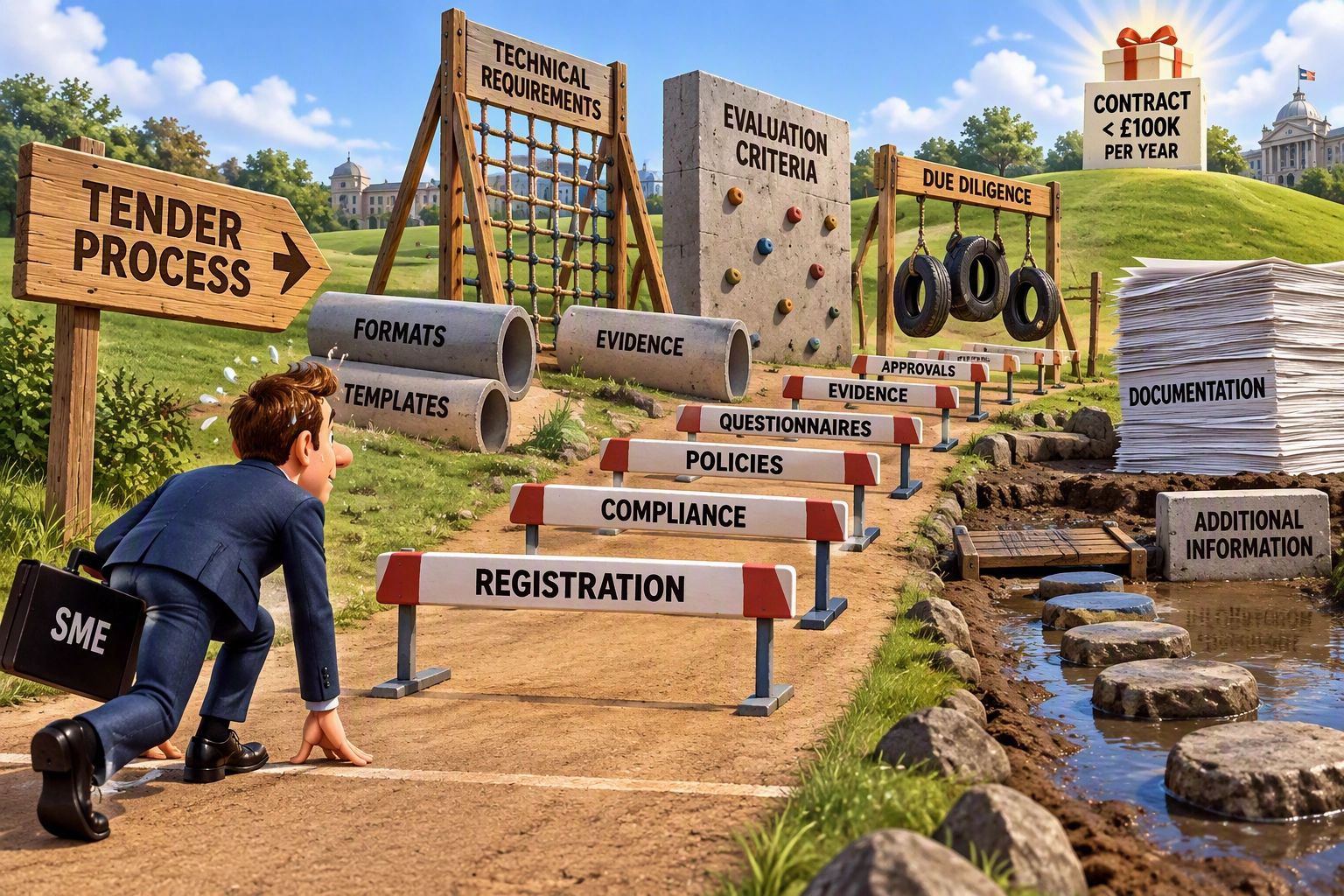
Preparation is the difference between a winning bid and a wasted effort. Frameworks only open every four or so years; if you miss the deadline or fail the SQ, you are locked out of that market until the next iteration, which can be between 3-7 years.
To prepare, you should:
- Engage with us: Reach out to us here and we will discuss your plans and get together some actions along with providing further details on how we can support you with our Full Tender Write service that has a 93% tender win rate.
- Register on the Portal: YPO conducts its tendering electronically, predominantly via the ProContract (Proactis) portal. Ensure your company profile is up to date and set up alerts for your specific CPV (Common Procurement Vocabulary) codes so you are notified the moment a framework is published.
- Audit Your Policies: YPO will ask for your Health & Safety, Equal Opportunities, Safeguarding, and Environmental policies. Ensure these are signed, dated within the last 12 months, and compliant with current UK legislation.
- Build a Case Study Library: Compile 3 to 5 detailed case studies of previous contracts of similar size and scope, complete with measurable KPIs and client references.
Maximising Your Offering on YPO Frameworks
Navigating the complexities of a YPO Framework or DPS application requires meticulous attention to detail and a deep understanding of public sector procurement language. Evaluators score strictly against predefined matrices, and a poorly structured answer can cost you millions in potential revenue.
At Your Tender Team, we have extensive experience navigating YPO frameworks. Our dedicated sales team can walk you through all the requisite requirements, whilst our bid management team curate bespoke responses that meet and exceed the commissioner’s standards and expectations.
Frequently Asked Questions: YPO Frameworks
What does YPO stand for?
YPO originally stood for the Yorkshire Purchasing Organisation. However, it now operates nationally across the UK as a leading Public Sector Buying Organisation, serving schools, local authorities, and emergency services nationwide.
What is the difference between a Framework and a DPS?
A Framework Agreement is a closed list of suppliers evaluated at a specific time, usually running for up to four years with no new suppliers allowed to join. A Dynamic Purchasing System (DPS) remains open, allowing new suppliers to apply and join at any point during its validity period, provided they meet the minimum criteria.
Do I need ISO certifications to win a YPO tender?
While not every single framework mandates them, holding UKAS-accredited ISO 9001, 14001, and 45001 is highly recommended. For sectors like Facilities Management, Construction, and IT, these accreditations are often mandatory pass/fail requirements.
 (2).png)





.jpeg)


 English (US) ·